
Acunetix as automated penetration testing software
To assess the security of web applications and APIs, organizations need a mix of automated security testing and expert manual penetration testing. Acunetix supports that process by providing automated penetration testing software that helps security teams discover vulnerabilities, validate exploitable findings, and prioritize remediation before attackers can take advantage of security weaknesses.
Automated vulnerability scanning and manual penetration testing serve different roles in cybersecurity. Penetration testers are too valuable to spend time manually confirming common vulnerabilities that reliable tools can find at scale, while automated scanners cannot fully replace human judgment for issues such as business logic flaws. Used together, they give security professionals a more complete view of web application security.
Acunetix is commonly used as an initial penetration testing tool for web applications and APIs. It helps identify issues such as SQL injections, cross-site scripting (XSS), misconfigurations, exposed attack surface, and many OWASP Top 10 vulnerabilities. With accurate scanning, mature payloads, proof-based validation for many findings, and a low false-positive rate, Acunetix helps penetration testers and security teams focus on vulnerabilities that are more likely to matter in real-world attacks.

Automated penetration testing tool
If you work as a penetration tester, ethical hacker, red team member, or application security professional, Acunetix can support your workflow in several ways, depending on your testing scope and workload.
- You can run Acunetix before a manual penetration test to find common web application vulnerabilities such as SQL injection, cross-site scripting (XSS), security misconfigurations, vulnerable components in the application or web server tech stack, and other issues across your web attack surface.
- After a scan, Acunetix can provide proof that many detected vulnerabilities are real and exploitable. This helps reduce time spent validating false positives and gives testers more time to investigate complex attack vectors, chained exploits, and business logic issues.
- If you prefer to rely on manual testing for exploitation and analysis, you can still use Acunetix as a user-friendly tool to crawl the web app, map its structure, discover inputs and endpoints, and provide a more complete target inventory for further testing.
More than web vulnerability scanning
Acunetix started as a web vulnerability scanner and has grown into a broader vulnerability assessment and vulnerability management solution for web applications and APIs. It provides integrations and API functionality that help security teams connect testing results to the rest of their application security workflow.
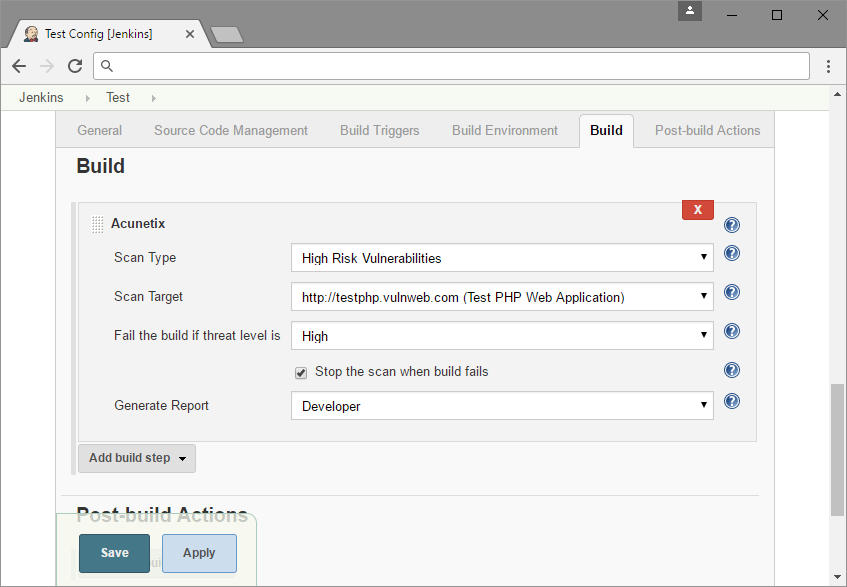
- You can use Acunetix in the software development lifecycle to automate security testing. For example, scans can be triggered from CI/CD tools such as Jenkins to check new builds before they reach production.
- Acunetix can integrate with issue trackers such as Jira, GitLab, and other development tools so security teams can assign findings, track remediation, and manage vulnerabilities alongside other development work.
- Acunetix can also work with other security tools for real-time remediation. For example, teams can use scan results to support temporary web application firewall (WAF) rules while developers work on a permanent fix.
Further manual information security testing
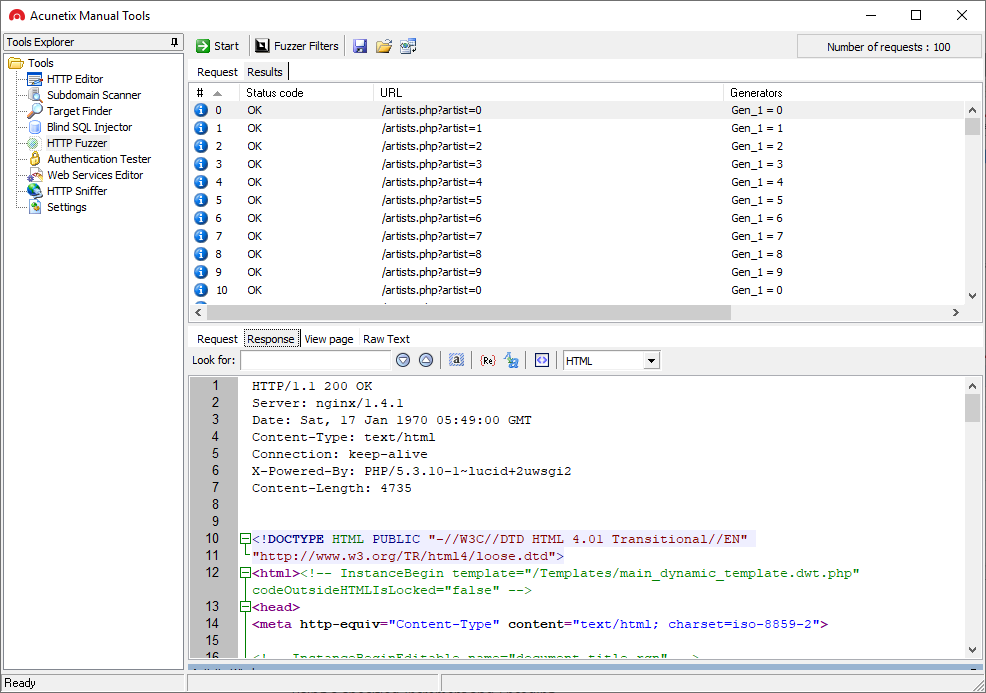
Acunetix is focused on web application and API security testing. For a complete penetration test or security assessment, you may also need manual testing and specialized tools that cover network security, infrastructure, wireless security, password testing, and other parts of the environment.
- While Acunetix can test for weak passwords using built-in or supplied dictionaries, penetration testers may perform additional password auditing with tools such as John the Ripper or THC Hydra, depending on the authorized scope.
- Acunetix does not test Wi-Fi security. For wireless assessments, testers may use dedicated tools such as aircrack-ng to check for WEP/WPA weaknesses where permitted.
- For deeper manual web, network, and traffic analysis, testers may use free and open-source pentesting tools, including packet analyzers, sniffers, brute-force tools, testing frameworks, open port scanners, network mappers, and exploit frameworks. Common examples include Kali Linux, Zed Attack Proxy (ZAP), w3af, Nmap, Metasploit, Wireshark, sqlmap, and similar tools.
Frequently asked questions
Penetration testing software is any tool used to support manual or automated penetration testing. This can include web application security testing tools, network security tools, attack proxies, exploit frameworks, password auditing tools, and vulnerability scanners.
For web application security, automated penetration testing software such as Acunetix helps identify vulnerabilities, validate findings where possible, and provide remediation guidance so security teams can address issues faster.
Examples of penetration testing tools include automated vulnerability scanners such as Acunetix, attack proxies such as ZAP, password auditing tools such as John the Ripper, exploit frameworks such as Metasploit, and security-focused operating systems such as Kali Linux.
Different tools support different use cases and identify different security issues. Some focus on web applications and APIs, while others are designed for network mapping, open port discovery, traffic analysis, brute-force testing, or exploit validation. Both commercial and open-source tools are available.
No. Vulnerability scanning and penetration testing are complementary. Vulnerability scanning automates the discovery and validation of many common security vulnerabilities, while manual penetration testing adds expert analysis for complex attack paths, business logic flaws, and chained vulnerabilities.
A practical approach for improved security posture is to use a vulnerability scanner such as Acunetix before and between manual penetration tests. This helps reduce repetitive manual work, improves coverage, and gives penetration testers more time to focus on issues that require human judgment.
You should usually do both. Penetration testing attempts to identify and validate ways an attacker could exploit vulnerabilities, while vulnerability assessment helps classify, prioritize, and manage findings based on severity, exploitability, and business impact.
Acunetix supports both processes by finding web application and API vulnerabilities, validating many findings, and helping teams prioritize remediation as part of a broader vulnerability management program.
Recommended Reading
Learn more about prominent vulnerabilities, keep up with recent product updates, and catch the latest news from Acunetix.




“We use Acunetix as part of our Security in the SDLC and to test code in DEV and SIT before being promoted to Production.”
Kurt Zanzi, Xerox CA-MMIS Information Securtiy Office, Xerox