
A better fit for continuous DAST
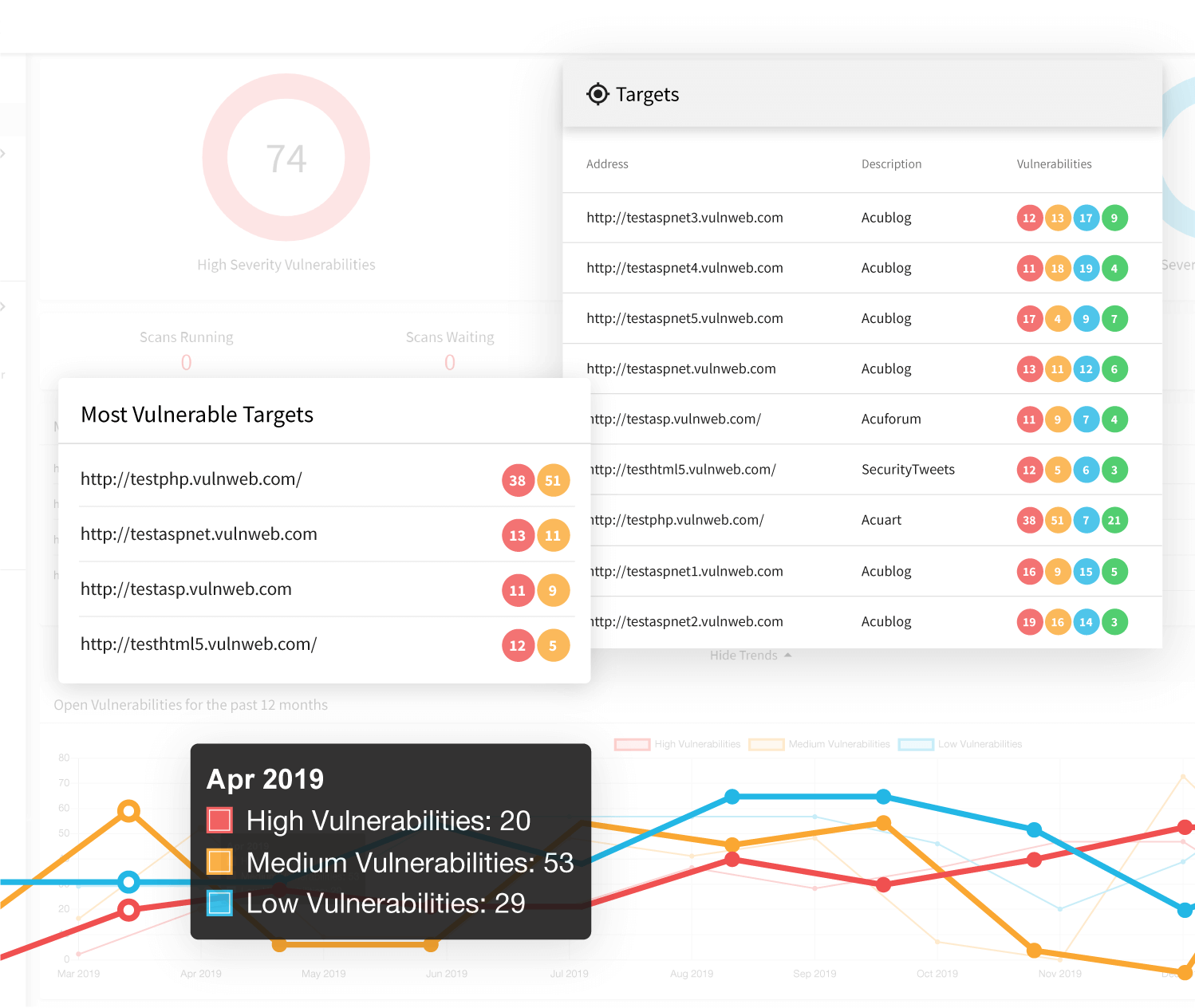
Pentest-Tools focuses on fast, point-in-time testing. That works well for ad-hoc assessments, but it becomes harder to maintain consistent coverage as your application footprint grows and release cycles accelerate. Acunetix is designed for continuous dynamic application security testing (DAST). It scans live applications from the outside in, giving teams a realistic view of what attackers can actually reach and exploit. This makes it easier to build repeatable testing into regular security processes rather than relying on one-off scans. Acunetix also integrates into modern development workflows. Teams can trigger scans automatically in pipelines such as GitHub Actions, GitLab CI, Jenkins, and Azure DevOps, helping ensure applications are tested on every build or deployment. With confirmed findings, teams can gate releases on verified high-severity issues and push detailed results directly into tools like Jira for faster remediation.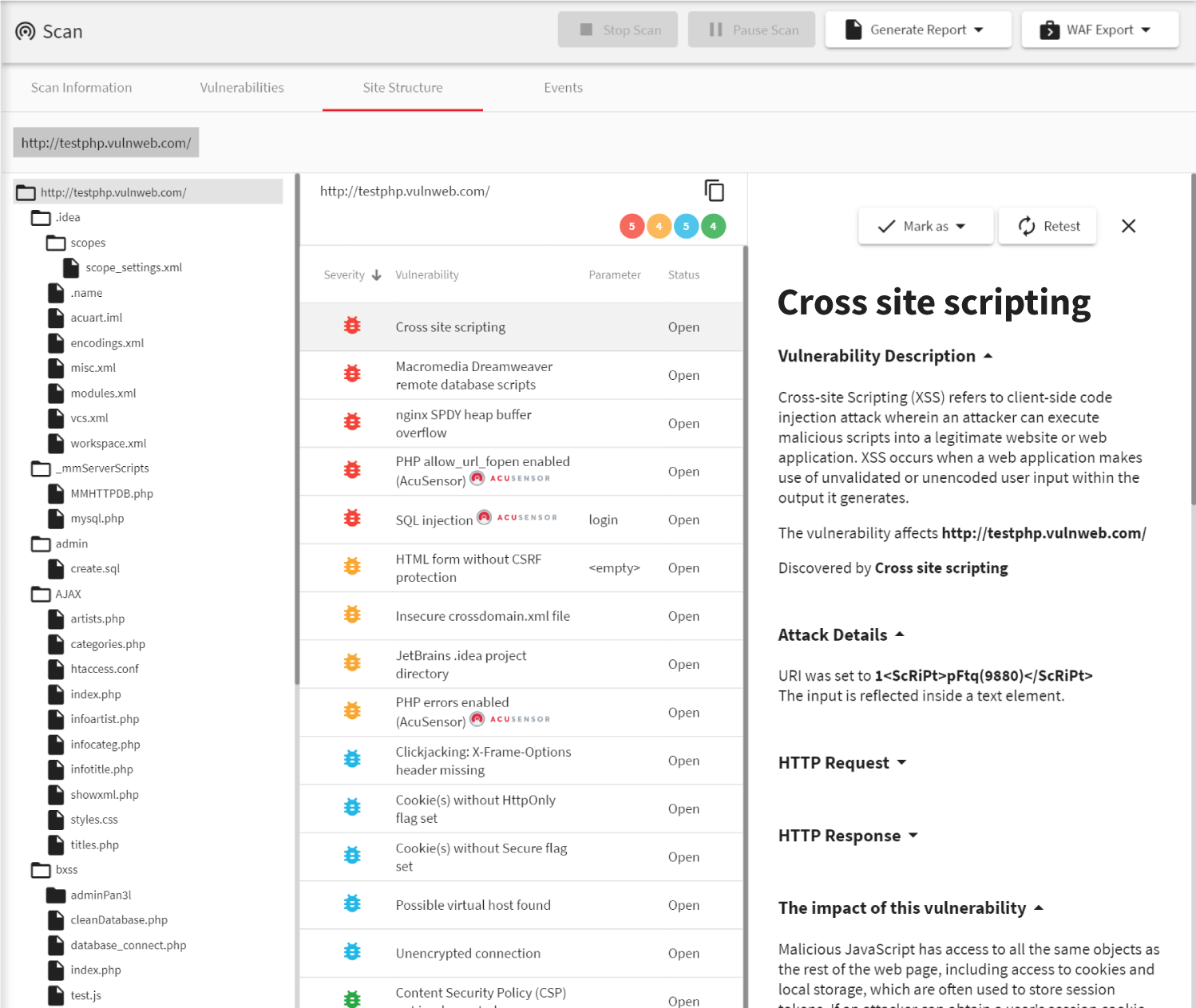
Proof-based scanning reduces wasted effort
One of the biggest challenges in automated security testing is separating real vulnerabilities from noise. Many tools report potential issues that still need manual verification before developers can act on them, and at scale this verification work can consume significant engineering time and delay remediation. Acunetix addresses this with proof-based scanning. For many vulnerability types, it automatically confirms exploitability and provides evidence, so teams know which findings are real and actionable. This has a direct impact on day-to-day workflows:- Verified findings instead of speculative alerts
- Clearer guidance for remediation
- Less time spent reproducing and validating issues

Coverage for modern applications and hidden attack surface
Modern web applications rely heavily on JavaScript frameworks and APIs, which can be difficult to test with basic scanning approaches. Traditional crawling methods often miss dynamically generated content and client-side routes. Acunetix addresses this with its DeepScan engine, which executes JavaScript and analyzes single-page applications in a way that reflects how users – and attackers – actually interact with them. This improves coverage for applications built with frameworks like React, Angular, and Vue. It also extends visibility beyond the visible interface. With AcuMonitor, Acunetix can detect out-of-band vulnerabilities such as blind cross-site scripting (blind XSS), server-side request forgery (SSRF), and out-of-band SQL injection. These issues do not return immediate responses during testing, making them easy to miss without dedicated detection mechanisms.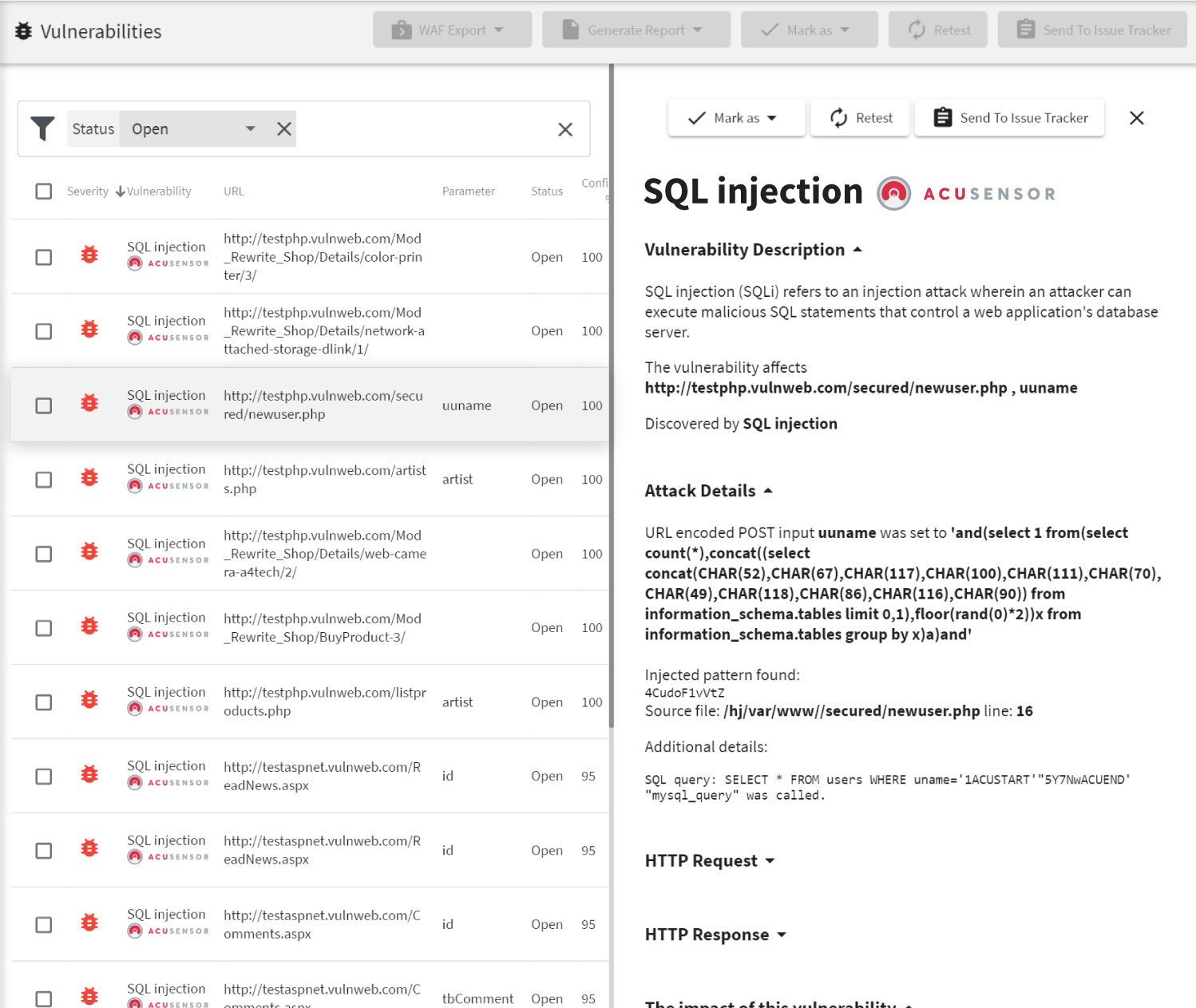
Acunetix vs Pentest-Tools at a glance
| Capability | Acunetix | Pentest-Tools |
| Testing approach | Continuous DAST for ongoing coverage | Primarily point-in-time scanning |
| Validation | Proof-based scanning with confirmed exploitability | Manual validation required |
| Modern app coverage | DeepScan for JavaScript and SPAs | Limited dynamic content execution |
| Blind vulnerabilities | AcuMonitor for blind XSS, SSRF, out-of-band SQLi | No equivalent capability |
| CI/CD integration | Native integrations with build pipelines and issue tracking | More limited automation |
| Best fit | Teams scaling application security across multiple apps | Individual testers or smaller teams |

Which tool is right for your team?
The right choice depends on how your team builds and tests applications today.- If your team deploys frequently and needs security testing to run automatically in CI/CD pipelines, Acunetix is built to support that workflow
- If you are testing modern single-page applications or API-driven architectures, deeper coverage from technologies like DeepScan becomes important
- If your team spends time validating scanner results before developers can act, proof-based scanning can reduce that overhead significantly
See Acunetix in action
If you are evaluating alternatives to Pentest-Tools, the best way to understand the difference is to see how Acunetix identifies and validates real vulnerabilities in a live application – without a lengthy setup or onboarding process. Request a demo to explore how proof-based scanning, modern application coverage, and CI/CD integration can help your team reduce risk with less manual effort, or start a trial to test it in your own environment.Frequently asked questions about Acunetix vs Pentest-Tools
For teams that need continuous, scalable web application security testing, Acunetix is a strong option. For smaller teams or occasional testing, lighter tools may be sufficient.
Acunetix is consistently ranked among the top Pentest-Tools alternatives on industry review platforms such as G2 and is designed to help teams focus on real, exploitable risk.
Proof-based scanning is an approach where the scanner confirms that a vulnerability is exploitable before reporting it. This reduces false positives and gives developers clear evidence to act on, improving both efficiency and trust in the results.
Yes. Acunetix uses its DeepScan engine to execute JavaScript and analyze dynamic content, making it effective for testing single-page applications (SPAs) built with modern frameworks.
Yes. As of 2026, Acunetix integrates with tools such as GitHub Actions, GitLab CI, Jenkins, and Azure DevOps, allowing teams to run automated scans as part of their build and deployment workflows. Findings can be used to gate releases and are easily shared with developers through issue tracking systems.
AcuMonitor is a service that enables detection of out-of-band vulnerabilities such as blind XSS, SSRF, and out-of-band SQL injection. These vulnerabilities do not produce immediate responses during scanning, so AcuMonitor provides a way to confirm when they are triggered.
Pricing depends on deployment size and requirements. While Acunetix may represent a larger upfront investment, it is designed for teams that need continuous testing, broader coverage, and reduced manual effort. For many organizations, the efficiency gains and improved accuracy offset the difference in cost.
Recommended reading
Learn more about prominent vulnerabilities, keep up with recent product updates, and catch the latest news from Acunetix.




“We use Acunetix as part of our Security in the SDLC and to test code in DEV and SIT before being promoted to Production.”
Kurt Zanzi, Xerox CA-MMIS Information Securtiy Office, Xerox