
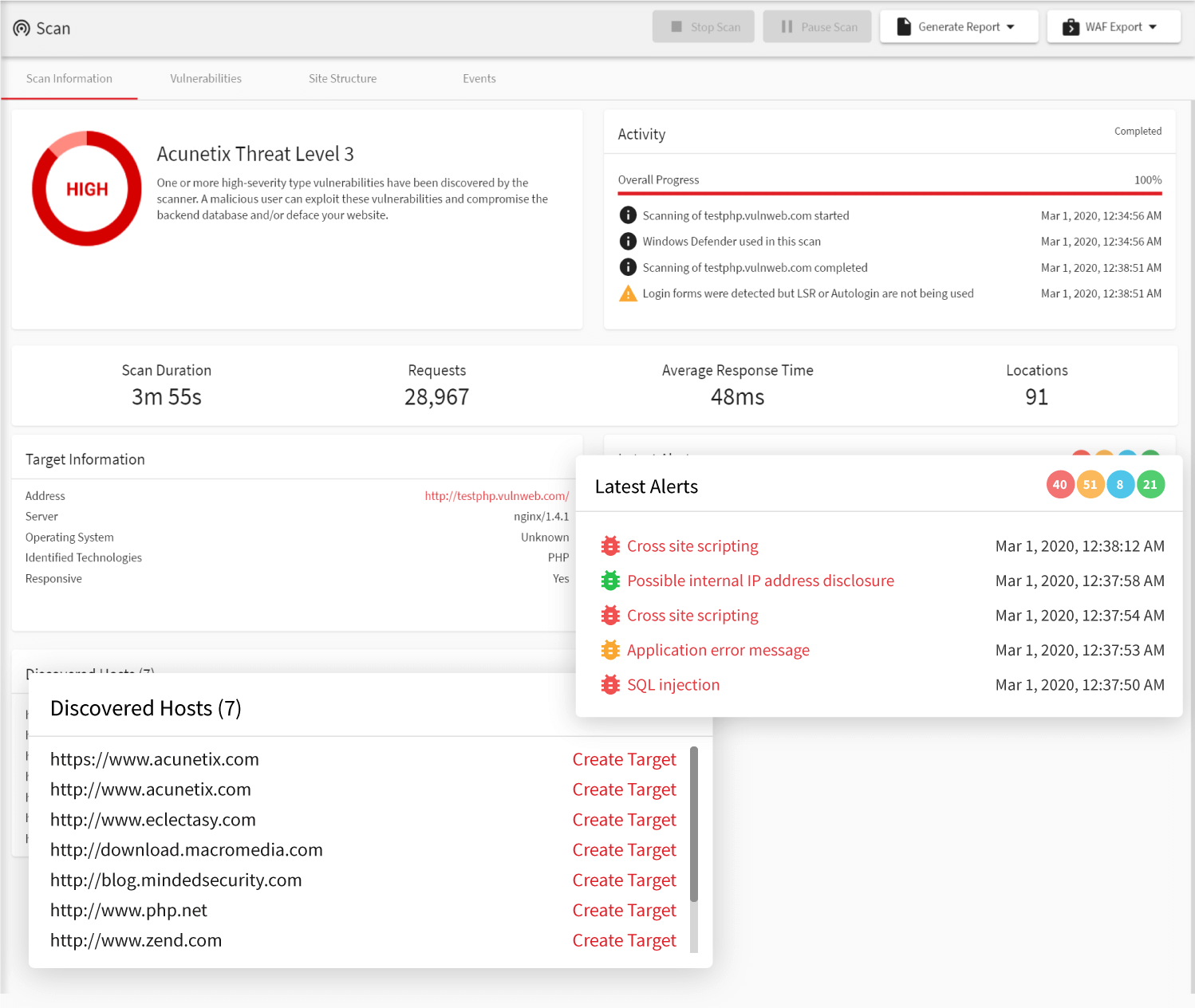
Why HIPAA vulnerability scanning matters for AppSec
HIPAA compliance is not a one-time exercise. The Security Rule requires covered entities and business associates to conduct ongoing risk assessment and vulnerability assessment for systems that handle ePHI, including web applications, APIs, endpoints, and cloud services. In practice, this means being able to answer three questions at any time:- Where could patient data be exposed in our applications and APIs?
- Which vulnerabilities represent real risk of unauthorized access or data breach?
- What has been fixed, and what still requires remediation?

How Invicti supports HIPAA-ready application security testing
Invicti helps healthcare providers automate vulnerability scanning across web applications and APIs that handle ePHI, providing actionable scan results that support both security operations and compliance reporting.Comprehensive testing for modern healthcare environments
Modern healthcare environments include far more than traditional websites. Invicti supports testing for:- Patient and provider portals
- Claims, billing, and EHR-integrated applications
- Public-facing healthcare websites
- REST, SOAP, and GraphQL APIs
- Authenticated application areas and internal scans
- Backend services connected to workstations and endpoints
Continuous scanning aligned to operational needs
Healthcare systems must remain available while being tested. Invicti enables:- Scheduled scans aligned to operational windows
- Scan throttling to avoid disruption to patient-facing systems
- Continuous monitoring with recurring scans
- Real-time visibility into scan results and newly introduced vulnerabilities
Actionable results with reduced false positives
Security teams need clarity, not noise. Invicti uses proof-based scanning to validate vulnerabilities, significantly reducing false positives and helping teams focus on confirmed issues. By prioritizing real risk, teams can assign meaningful risk ratings, reduce alert fatigue, and improve vulnerability management efficiency. This DAST-first approach ensures you are fixing vulnerabilities that attackers can actually exploit.Integrated remediation and tracking
Invicti supports full vulnerability management workflows by:- Exporting findings to tools such as Jira, GitHub, and GitLab
- Tracking remediation progress with clear metrics
- Retesting fixes to confirm vulnerabilities are resolved
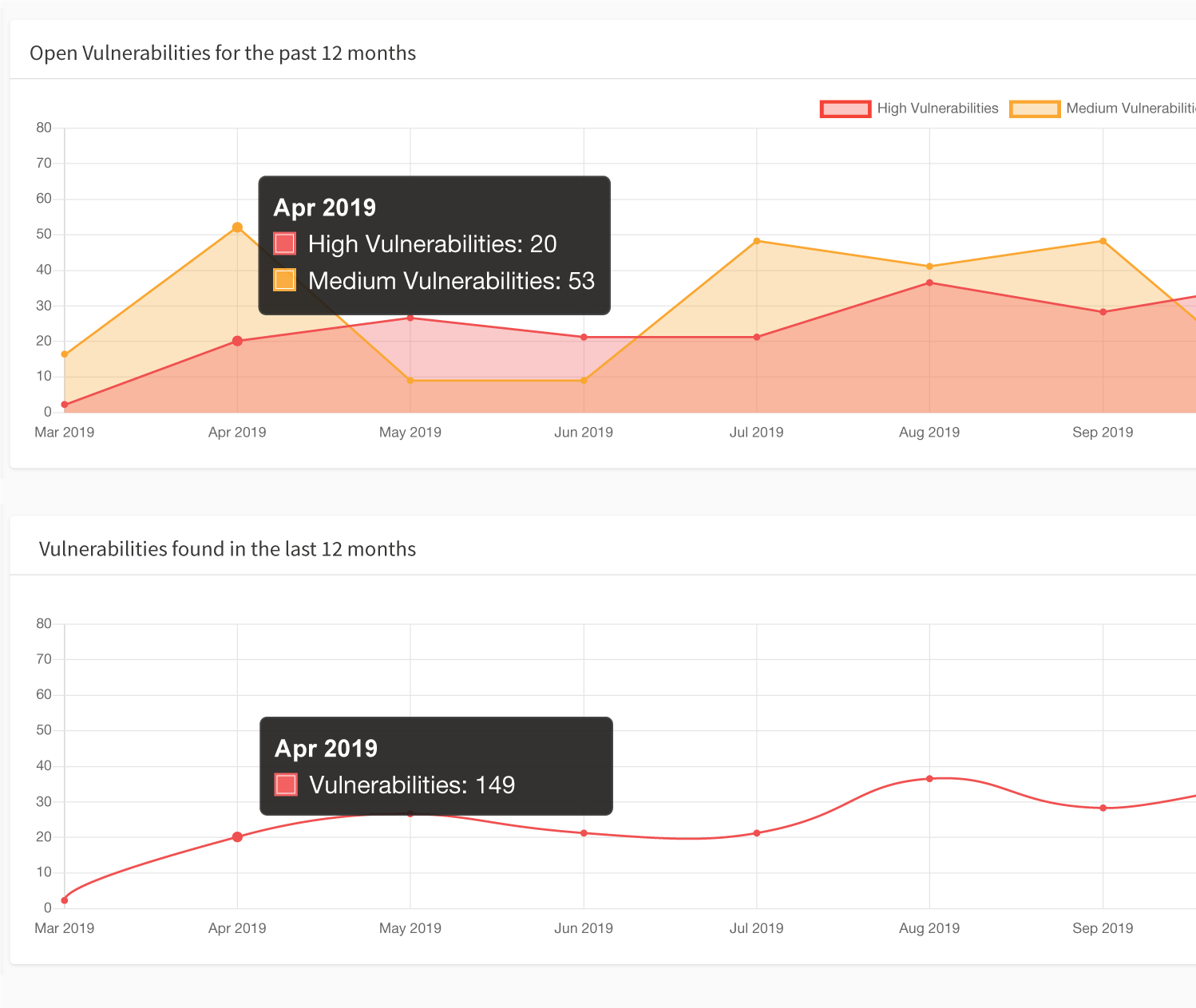
From vulnerability findings to audit-ready HIPAA evidence
HIPAA compliance depends on documentation as much as detection. Invicti helps translate scan results into evidence that supports audits, internal reviews, and risk management processes.Built-in HIPAA reporting
Invicti includes compliance-ready reports that align vulnerability data with HIPAA requirements. These reports help teams:- Demonstrate ongoing risk assessment and vulnerability management
- Provide structured outputs for auditors and the Office for Civil Rights
- Track remediation metrics over time
Mapping security testing to HIPAA requirements
Application vulnerability scanning supports several key areas of the HIPAA Security Rule:- Risk analysis and risk management (§164.308(a)(1)) – Identify vulnerabilities and assign risk ratings
- Information system activity review (§164.308(a)(1)(ii)(D)) – Provide evidence of continuous monitoring
- Access control and authentication (§164.312(a), §164.312(d)) – Detect weaknesses leading to unauthorized access
- Audit controls (§164.312(b)) – Maintain records of scan results and remediation
- Integrity and transmission security (§164.312(c), §164.312(e)) – Identify vulnerabilities affecting secure data handling
Centralized visibility for stakeholders
Dashboards and role-based access provide visibility across teams while maintaining control. Security, development, and compliance stakeholders can review scan results, track security posture and remediation progress, and support audits from a centralized platform.Frequently asked questions about HIPAA vulnerability scanning
HIPAA requires covered entities and business associates to perform an accurate and thorough risk assessment of systems handling ePHI. While specific scanning tools are not mandated, vulnerability scanning is a standard method for identifying security gaps and supporting compliance.
The proposed HIPAA update would require vulnerability scans at least every six months and pentesting annually. Many organizations implement more frequent scans and continuous monitoring to reduce risk from emerging threats and new CVEs.
Vulnerability scanning is automated and continuous, identifying known weaknesses and misconfigurations. Penetration testing is more in-depth, often manual, and designed to simulate real cyberattacks. Both are essential for a complete cybersecurity strategy.
HIPAA risk assessment should include both external exposure and internal risks. Internal scans help identify vulnerabilities in authenticated areas, endpoints, and workstations, while external scans assess internet-facing applications and APIs.
Vulnerability scanning supports §164.308(a)(1) for risk analysis and risk management, along with technical safeguards in §164.312, including access control, audit controls, integrity, and transmission security.
Invicti helps healthcare providers automate vulnerability assessment and vulnerability management for web applications and APIs. By delivering accurate scan results, reducing false positives, and supporting audit-ready reporting, it strengthens HIPAA-aligned cybersecurity programs.
Recommended reading
Learn more about prominent vulnerabilities, keep up with recent product updates, and catch the latest news from Acunetix.




“We use Acunetix as part of our Security in the SDLC and to test code in DEV and SIT before being promoted to Production.”
Kurt Zanzi, Xerox CA-MMIS Information Securtiy Office, Xerox