
Web application penetration testing helps organizations identify vulnerabilities that could expose sensitive data, disrupt services, or provide attackers with unauthorized access. While manual penetration testing remains an essential part of application security, automated testing makes it possible to identify vulnerabilities continuously throughout development and production.
Invicti is a dynamic application security testing (DAST) solution for web applications and APIs. It enables security and development teams to detect exploitable vulnerabilities early, validate findings with proof-based scanning technology, and integrate security testing into modern development workflows.
Whether you’re securing a single business-critical application or a growing portfolio of web assets, Invicti helps you maintain visibility into your attack surface between manual penetration tests.
What is web application penetration testing?
Web application penetration testing is the process of identifying and validating security weaknesses in web applications by simulating real-world attacks. The goal is to uncover vulnerabilities before they can be exploited by malicious actors.
Penetration testing typically focuses on issues such as:
- SQL injection
- Cross-site scripting (XSS)
- Authentication and authorization flaws
- Security misconfigurations
- Sensitive data exposure
- Server-side vulnerabilities
- API security issues
Modern organizations tend to rely on two complementary approaches to dynamic testing:
- Manual penetration testing performed by experienced security professionals
- Automated security testing using tools such as DAST
Together, and now often augmented by agentic pentesting, these approaches provide broader security coverage than either could achieve alone.
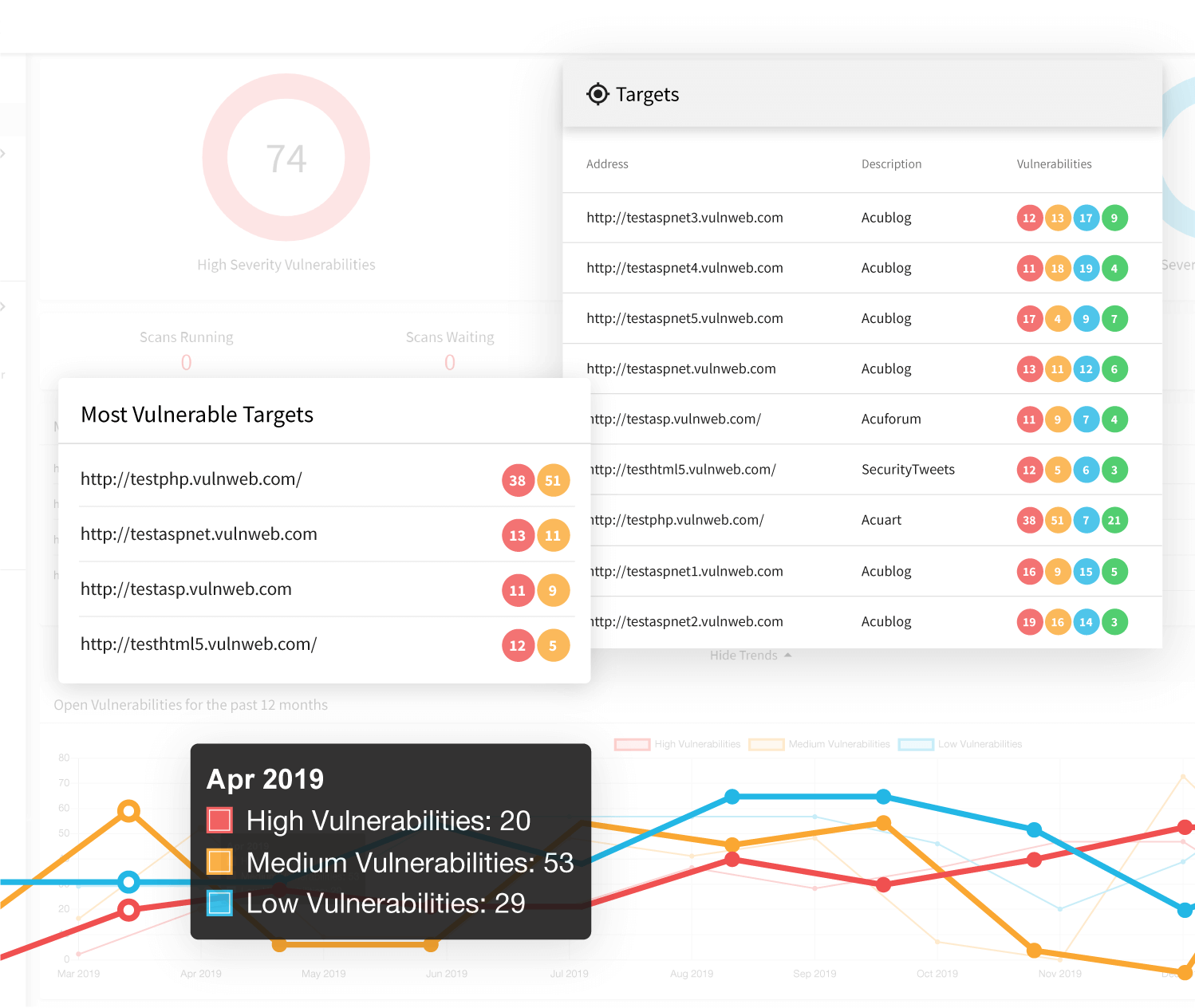
Manual penetration testing vs. automated DAST
Manual penetration testing and automated dynamic application security testing serve different purposes. Rather than choosing one over the other, most organizations benefit from using both.
Manual penetration testing
Manual testing allows experienced security professionals to investigate complex business logic, chained attack paths, and application-specific scenarios that require human judgment and creativity. Manual assessments are typically performed:
- Before major releases
- To satisfy compliance requirements
- During external security assessments
- For high-risk applications
Because manual testing is time-intensive and each test is a separate cost item, it is usually conducted periodically rather than continuously.
Automated DAST
Dynamic application security testing automatically scans running applications from the outside, identifying vulnerabilities by interacting with the application much like an attacker would. Unlike periodic manual assessments, automated DAST can be run:
- Throughout the SDLC
- As part of CI/CD pipelines
- On demand after application changes
- On production environments with appropriate safeguards
This enables organizations to scan as often as they need to identify newly introduced vulnerabilities much earlier and reduce the time between discovery and remediation.

Why continuous security testing matters
Applications change constantly. New features, third-party integrations, infrastructure updates, and API changes can all introduce new vulnerabilities.
A penetration test provides valuable insight into an application’s security posture at a specific point in time. Continuous automated testing helps maintain that visibility as the application evolves.
By incorporating automated DAST into regular development and release processes, organizations can:
- Detect vulnerabilities sooner
- Reduce remediation costs
- Improve developer feedback loops
- Identify security regressions after updates
- Maintain ongoing visibility into application risk
Continuous testing complements manual penetration testing by helping teams find issues between scheduled assessments.
How Invicti complements manual penetration testing
Invicti is designed to automate the repetitive, scalable aspects of application security testing while allowing security teams to focus their expertise where it delivers the greatest value. Instead of replacing manual penetration testing, Invicti helps organizations:
- Test applications more frequently
- Scan significantly more applications than would be practical with manual testing alone
- Identify common vulnerabilities before engaging external testers
- Reduce repetitive validation work
- Prioritize manual testing for complex attack scenarios
This combination improves overall application security while making more efficient use of security resources.
Comprehensive testing for modern web applications and APIs
Modern applications extend far beyond traditional websites. APIs now expose critical business functionality, while JavaScript frameworks generate pages and functionality dynamically in the browser.
Invicti is designed to test modern web applications and APIs from an attacker’s perspective. Its embedded browser engine fully renders websites and single-page applications (SPAs), allowing dynamically generated content and user interactions to be evaluated as part of the security assessment.
Supported technologies include:
- REST APIs
- SOAP APIs
- GraphQL APIs
- Single-page applications (SPAs)
- Modern JavaScript frameworks
- Traditional server-rendered web applications
By testing both web applications and APIs in the way attackers interact with them, Invicti helps organizations identify vulnerabilities across their external attack surface.
Proof-based scanning helps reduce false positives
One of the biggest challenges in automated security testing is determining which findings require immediate attention.
Invicti uses proof-based scanning technology to safely validate many vulnerabilities by demonstrating exploitability. This provides security teams with higher confidence in scan results and helps reduce the time spent manually verifying findings.
For supported technologies, Invicti can also use its integrated IAST sensor to provide additional application insight during testing, improving vulnerability detection and supplying developers with richer remediation information.
By minimizing false positives and providing more actionable findings, teams can spend more time fixing real vulnerabilities instead of investigating inaccurate alerts.
Integrate security into your development workflow
Security testing is most effective when it becomes part of everyday development rather than a separate activity performed only before release. Invicti integrates with existing development and DevOps workflows, allowing teams to automate security testing alongside software delivery.
Teams can integrate Invicti scans with:
- CI/CD pipelines
- Issue tracking systems
- Collaboration platforms
- Development workflows
This helps developers receive security feedback earlier, reducing the effort required to address vulnerabilities before deployment.
Penetration testing best practices
An effective application security program combines multiple testing approaches throughout the software development lifecycle. Best practices include the following:
Combine manual and automated testing
Manual penetration testing provides deep, expert analysis of high-risk applications, while automated DAST delivers continuous security testing across your application portfolio. Together, they provide broader coverage than either approach alone.
Test throughout the SDLC
Run automated security scans during development, before release, and after significant application changes. Earlier detection reduces remediation costs and helps prevent vulnerabilities from reaching production.
Include APIs in your testing strategy
APIs often expose sensitive functionality and data. Testing web applications without also testing their APIs can leave significant portions of the attack surface unassessed.
Prioritize remediation
Not every vulnerability presents the same level of risk. Focus first on validated, exploitable vulnerabilities and high-severity issues that expose business-critical assets.
Test continuously
Security testing should not be limited to annual assessments or release milestones. Regular automated testing helps identify newly introduced vulnerabilities as applications evolve.
The future of application security testing
Application security testing continues to evolve as applications become more complex and development cycles accelerate. Organizations increasingly combine several complementary approaches:
- Automated DAST for continuous vulnerability detection
- Manual penetration testing for complex security assessments
- Static and software composition analysis where appropriate
- Emerging agentic pentesting capabilities that use AI to automate portions of security assessment while extending the reach of human testers
Each approach addresses different aspects of application security. Together, they help organizations improve security coverage while making better use of limited security expertise.
Why choose Invicti?
Invicti helps organizations integrate continuous dynamic security testing into their application security programs without adding unnecessary complexity. With Invicti, you can:
- Automatically test web applications and APIs for a wide range of security vulnerabilities
- Test modern web applications using a full embedded browser engine that evaluates dynamically generated content and user interactions
- Validate many findings using proof-based scanning technology
- Reduce false positives and manual verification effort
- Detect classes of vulnerabilities that require out-of-band interaction using dedicated OOB detection technology
- Improve testing accuracy for supported applications using integrated IAST sensor technology
- Integrate security testing into CI/CD pipelines and existing development workflows
- Scale testing across growing application portfolios
Start testing your applications continuously
Manual penetration testing remains an important part of every mature application security program. Continuous automated testing helps ensure that newly introduced vulnerabilities do not remain undiscovered between assessments.
Invicti enables organizations to continuously test web applications and APIs, validate findings, integrate security into development workflows, and improve visibility into application risk throughout the software development lifecycle. Whether you’re strengthening an existing AppSec program or introducing continuous security testing for the first time, Invicti helps you identify vulnerabilities earlier and remediate them with confidence.
Request a demo to make fast and accurate vulnerability scanning the reliable baseline for your periodic manual pentesting.
Frequently asked questions about penetration testing for web apps and APIs
Vulnerability scanning uses automated tools to identify known security weaknesses quickly and consistently across many applications. Penetration testing involves a security professional who manually investigates vulnerabilities, attack paths, and application-specific logic. Most organizations use vulnerability scanning continuously and perform manual penetration testing periodically for deeper assessments.
No. Automated DAST and manual penetration testing serve different purposes. DAST efficiently identifies many common and high-impact vulnerabilities across large application portfolios, while manual testing remains valuable for evaluating complex attack scenarios, business logic flaws, and application-specific risks.
Security testing should be performed whenever applications change. Automated DAST can be integrated into development and deployment pipelines to provide continuous testing, while manual penetration tests are commonly scheduled before major releases, after significant architectural changes, or to meet compliance requirements.
Yes. Invicti supports automated security testing for REST, SOAP, and GraphQL APIs alongside traditional web applications, helping organizations secure their complete web attack surface.
Like any automated security tool, some findings may require review. However, Invicti uses proof-based scanning technology to safely validate many vulnerabilities by demonstrating exploitability, helping reduce false positives and giving teams greater confidence in scan results.